








Artist Statement
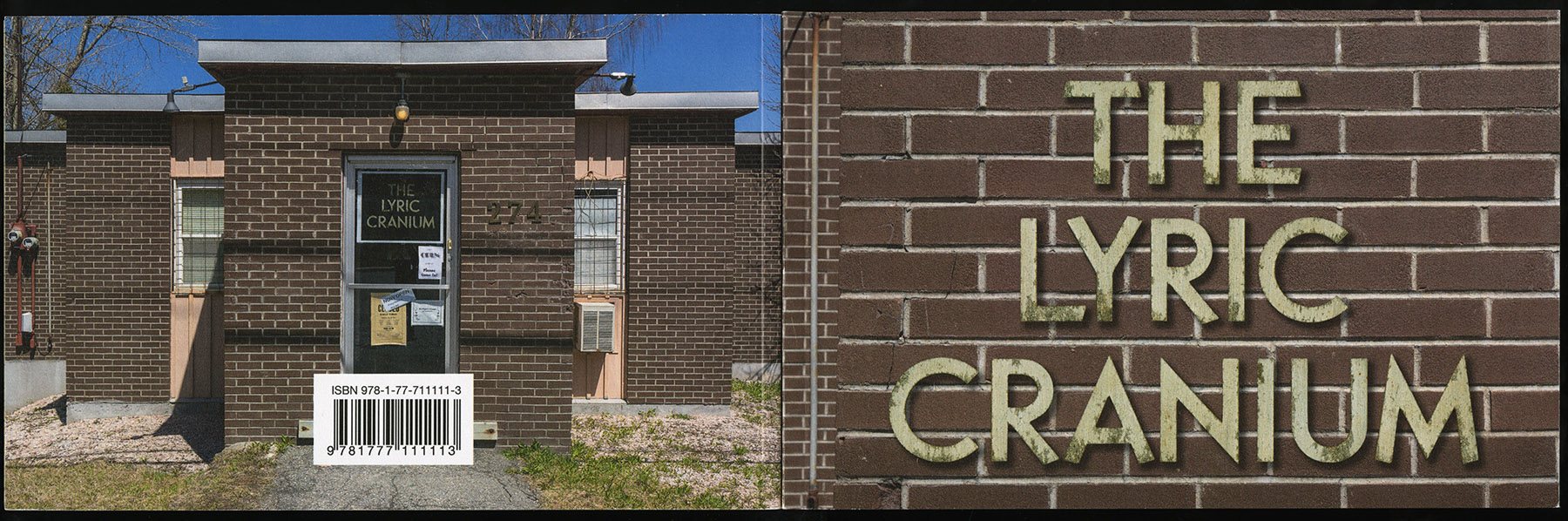
As you enter the Lyric Cranium, if you could ignore for a minute the onslaught of skulls and displays, you would find nestled just to the left of the doorway (to the right as you come in) a small, framed dedication. It describes how this museum is the resurrected collection of Griff Hornan (1881-1959), a collector and museologist who in turn supposedly salvaged many of the artifacts from the collections and oddities accumulated by Homer Brunion (ca1875-ca1940). This brief insight into the backstory accounts for the various areas of emphasis we see on display in the Lyric Cranium, from the framed examples from the Hornan Post Mortem Portrait Archive, to the natural history specimens from the Brunion Collection. In addition, work from the current curator’s personal art collection is on display as well.
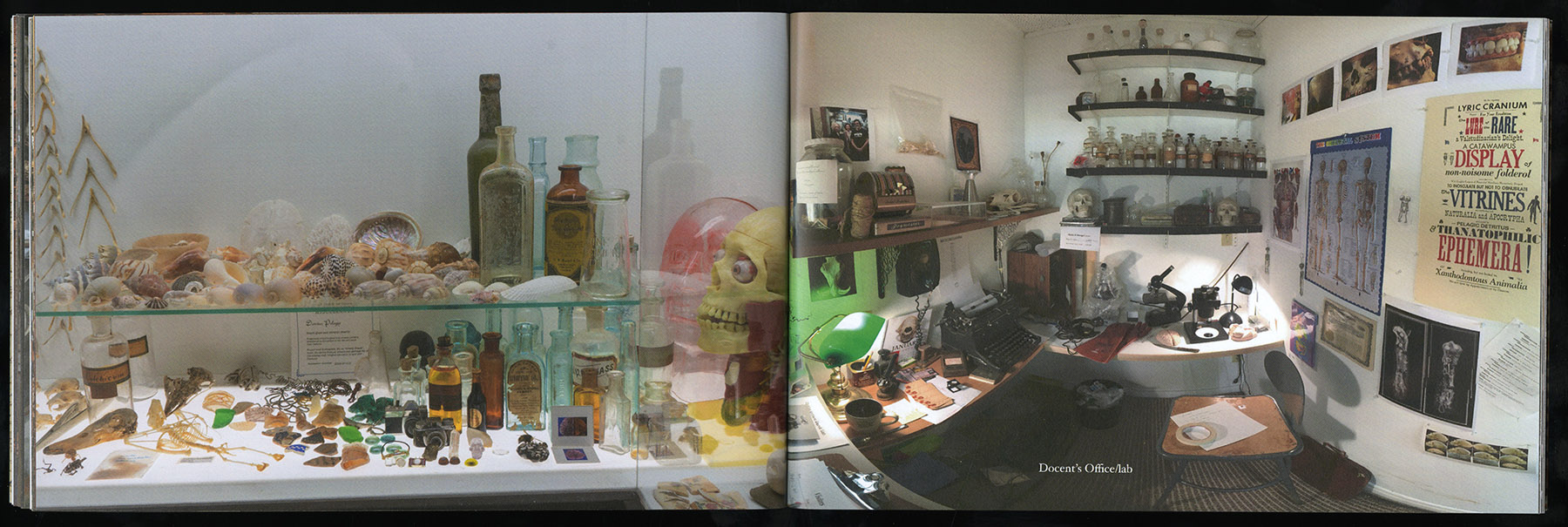
The Lyric Cranium consists of several linked areas or rooms. Two of these areas refer to the classical 19th Century natural history museum, the Wunderkammer, or cabinet of curiosities. Another dark area is illuminated by a stark display space, devoid of pretence or nostalgia, more of a simple window onto a collection of miscellany and detritus. This area presents meticulously arranged objects in a bright clear light at chest height; everything is meant to catch one’s eye and imagination as one moves through the narrow spaces between the vitrines. A small room in between these others provides a glimpse into the cluttered docent’s office and mini-laboratory.
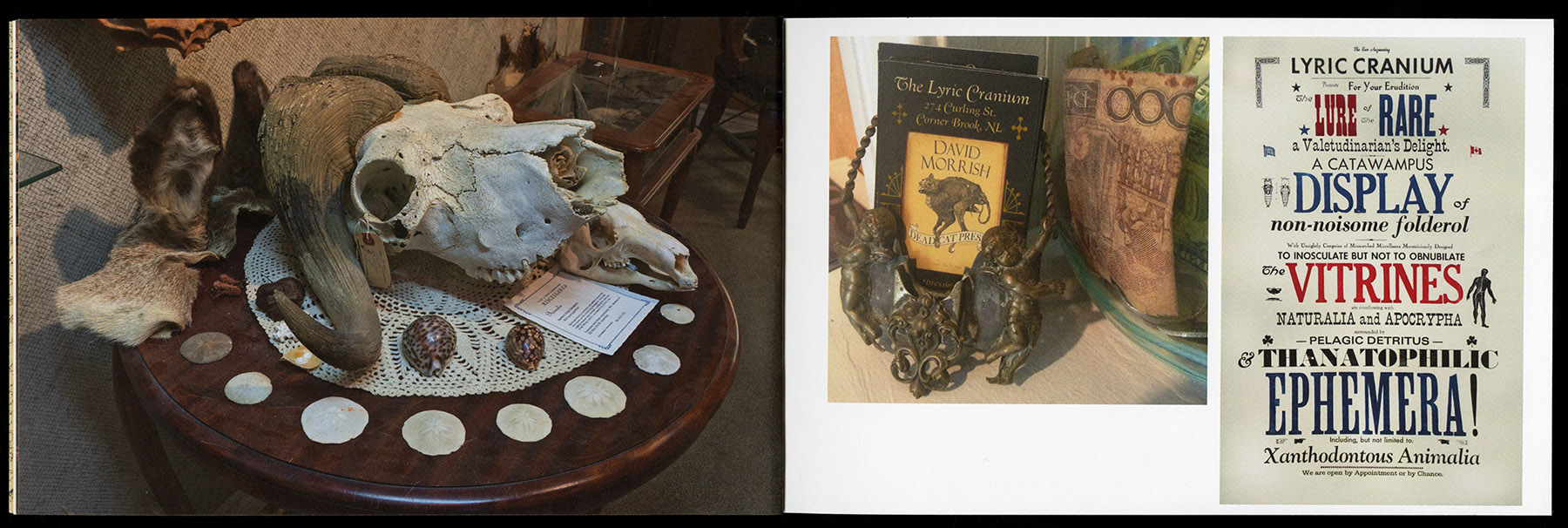
The Wunderkammer areas are themselves loosely divided into the natural history room and the memento mori room. The former is crowded with animal skulls, horns and antlers, taxidermy, pelt fragments and a dehydrated cat, “Fluffy”. The latter room is dominated by a human skeleton and several human skulls, 19th C. post mortem portrait photographs, archaeological artifacts, and divers references to human life, death and funerary practice. There is some intermingling and cross-over that help integrate the spaces and confuse the artificial separation between the animal kingdom and humanity.
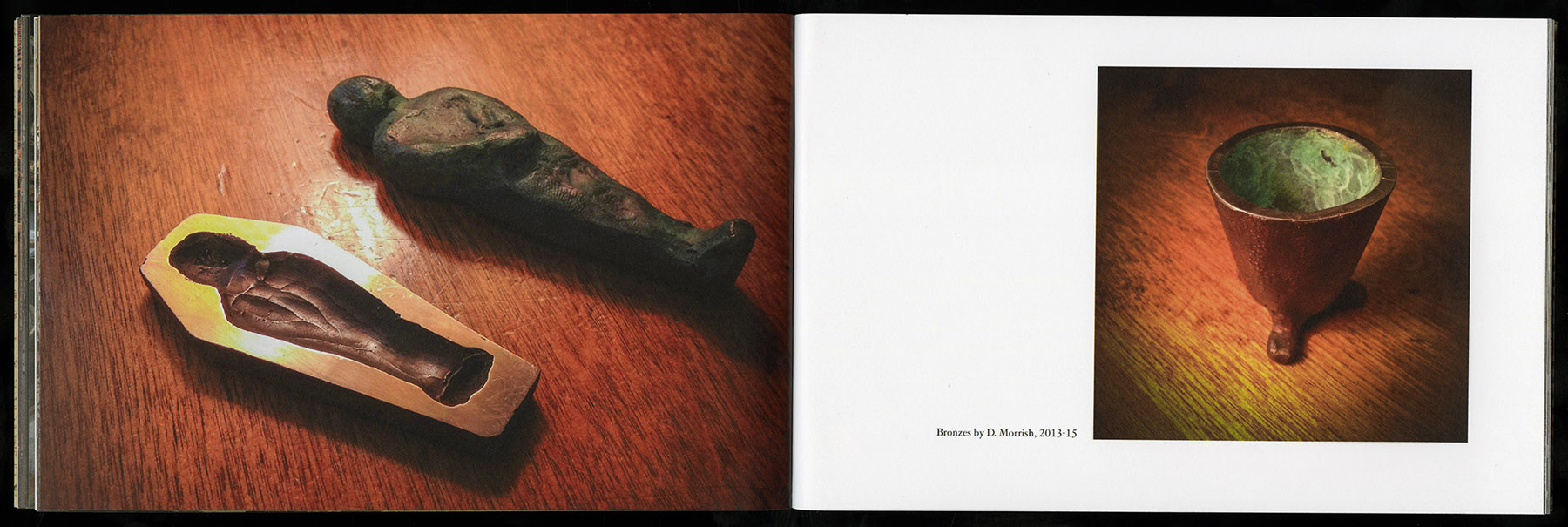
I’ve always told visitors to this collection that they are entering an immersive still life. I’ve described how the elements presented within the space act as a catalyst for other artwork: photographs, intaglio and letterpress prints, ephemera, drawings, paintings, videos, sculptures and miscellaneous fictions. Although many of these projects did materialize, there is an abundance of empty space left unfilled by my good intentions Instead we find physical evidence of my desire to possess and share an eclectic array of simply interesting stuff.
The arrangements themselves are part of a creative process that illustrates where my subconscious takes me while I sort, position, and juxtapose the various minutiae of my collections. Pattern and interrelationships are vitally important even though they were often derived subconsciously. I collect images as well, visual ideas hoarded from on-line or published Wunderkammern that fascinate me. While I desire to possess these things and what they represent, my only real option is to recreate or reinterpret them with what I have, documenting and presenting what is seen within the walls of the Lyric Cranium.
The life of this collection in this form was short. Some pieces will maintain a prominent position of respect and pride in my current studio and home in Ontario. Some pieces can be re-purposed for assemblages and shadow boxes, living a new life within another form of artmaking. Some pieces are in storage; too ordinary to inspire, too valuable to throw away. And some bits and pieces were given away to like-minded packrats and even (horror of horrors) discarded. So, in other words, the Lyric Cranium ceased to exist after August of 2016 when it was dismantled and packed for moving. It lives on in the records I create as this small booklet is but one example, being the slightly enlarged second edition (2023) of the original 2016 catalogue.
ISBN 978-1-77-711111-3 (2nd edition, 2023) at Blurb.