Artist Statement
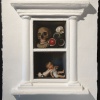
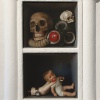
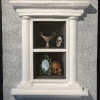
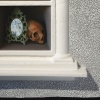
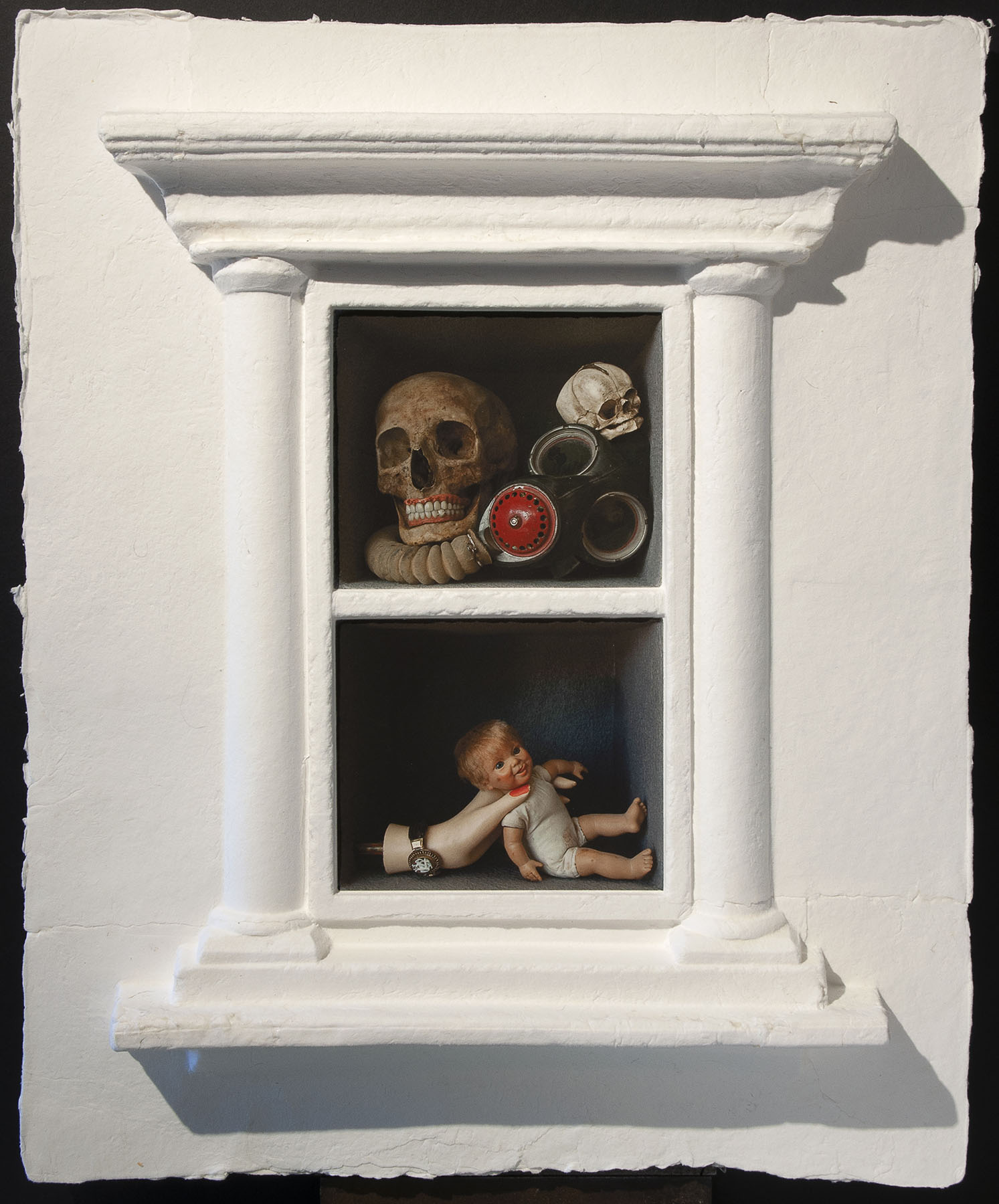
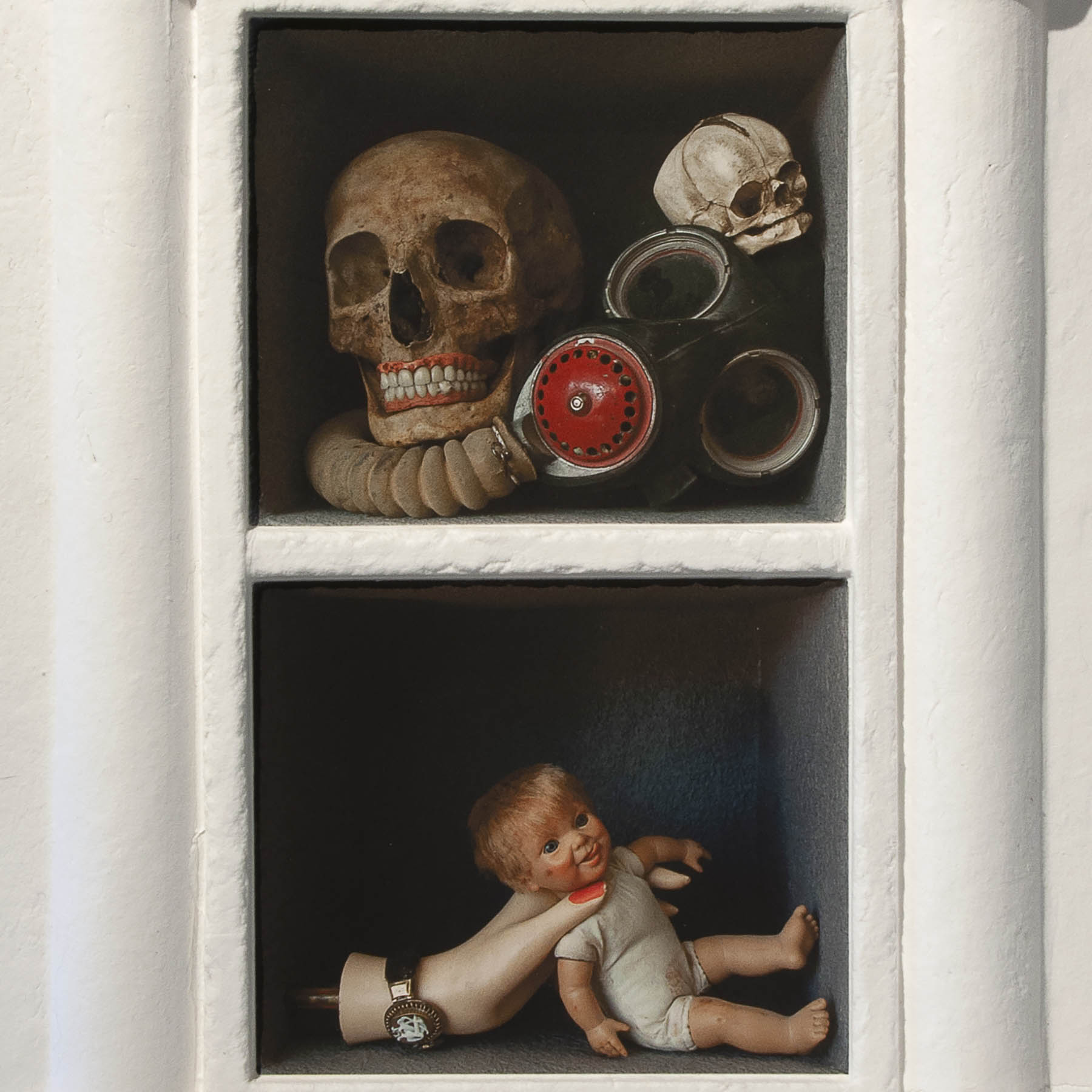
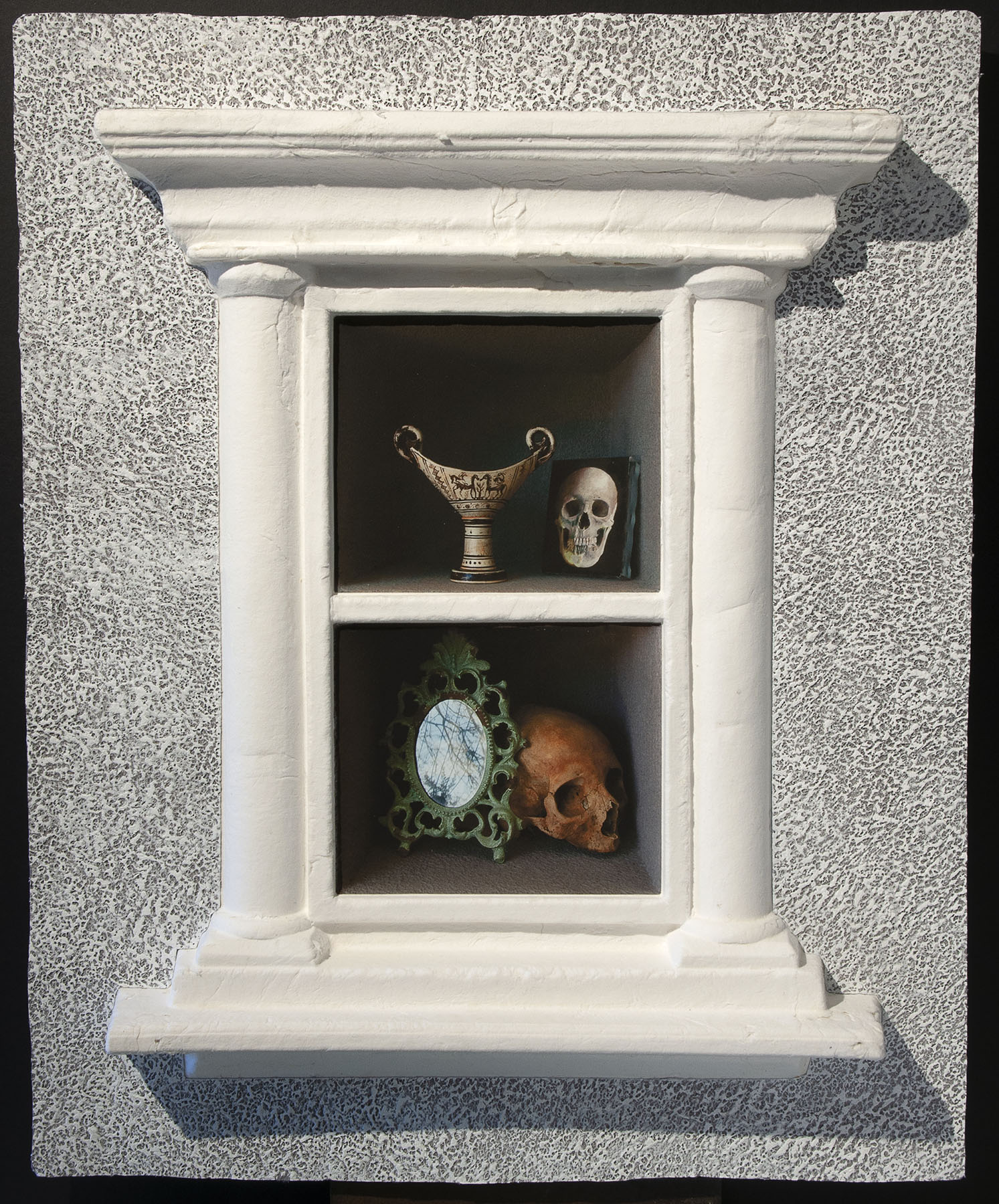
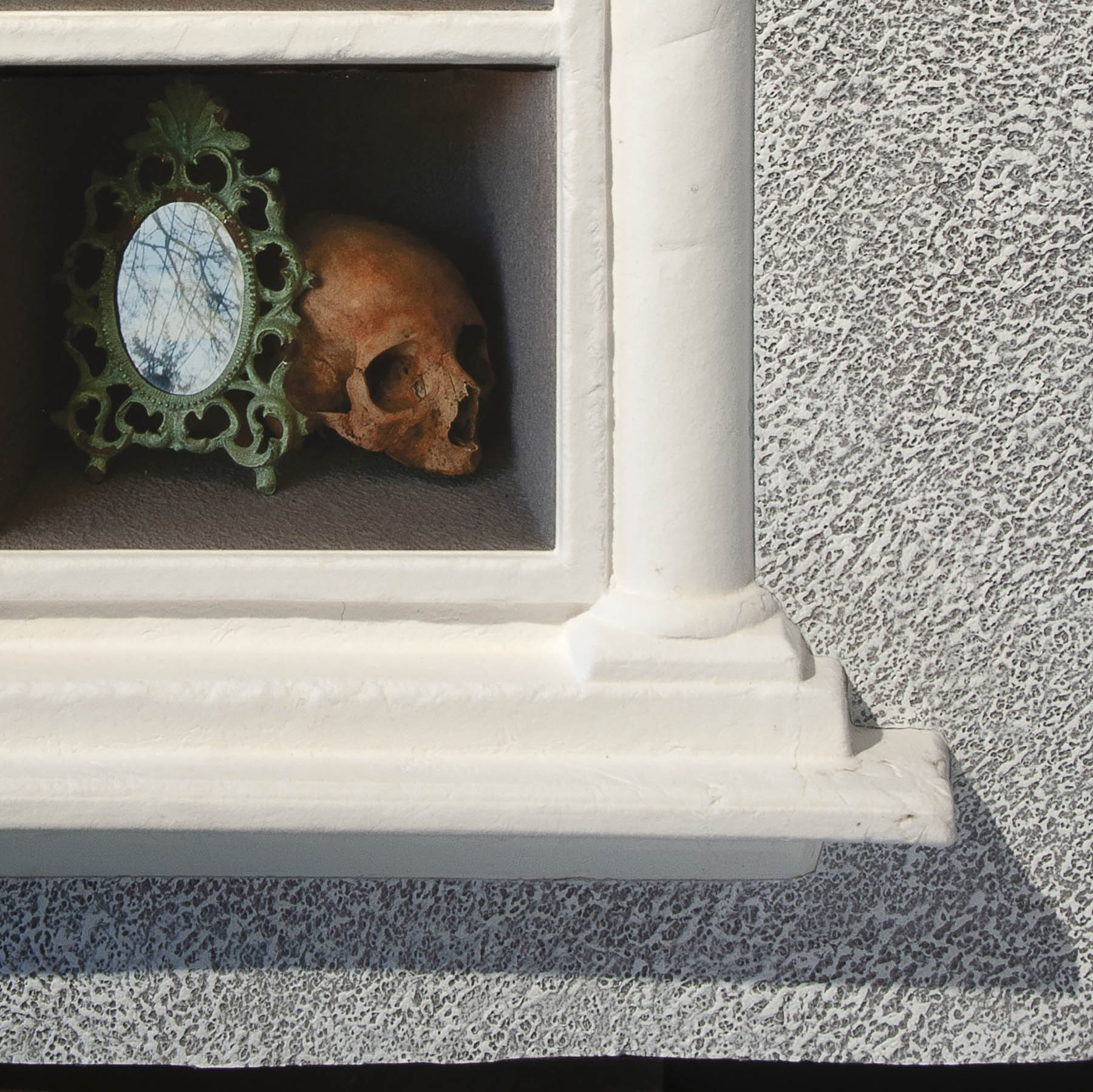
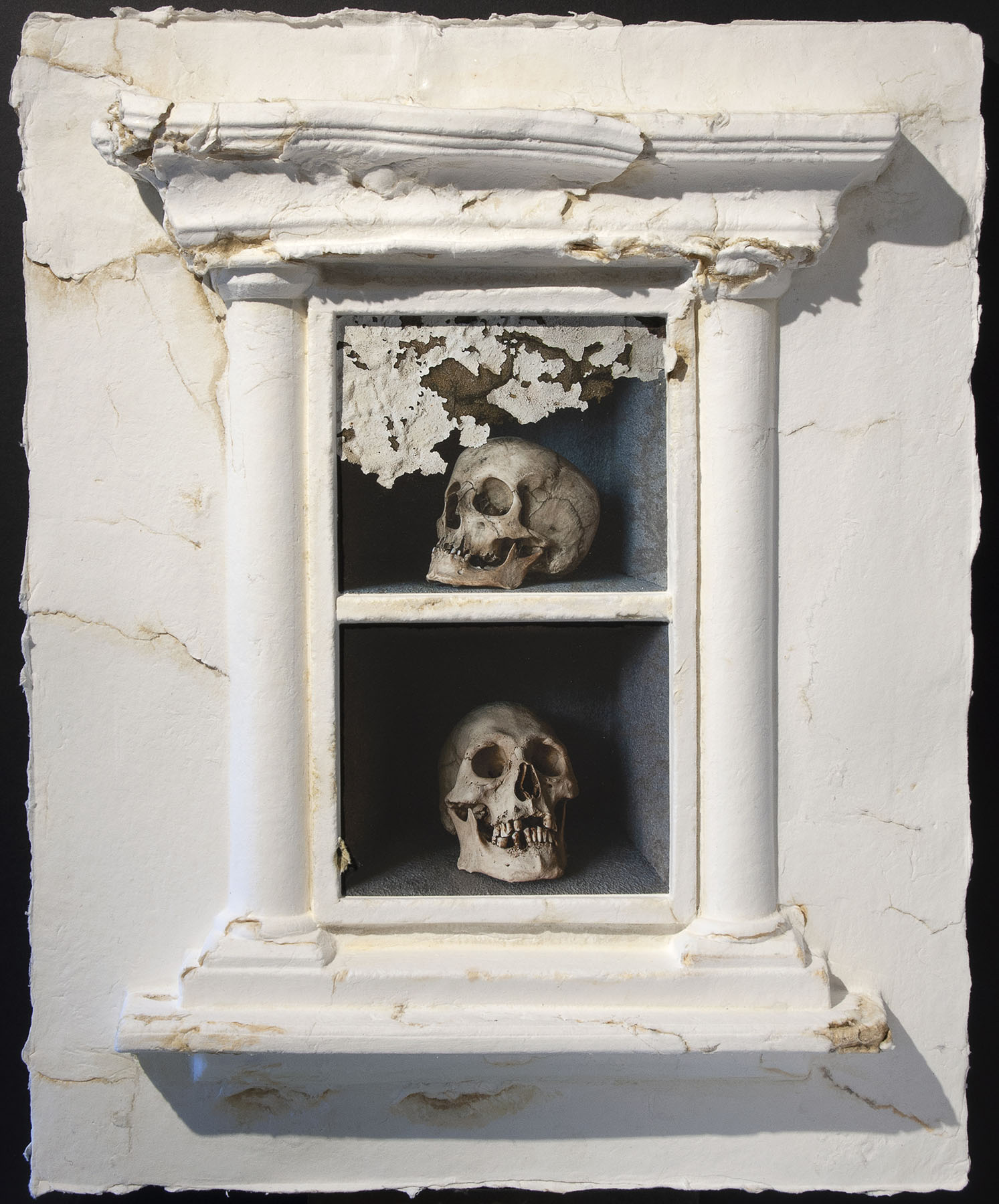
Echoing Renaissance and Baroque traditions, these cast paper works adopt classical architectural motifs—such as columns and pediments—to create ornate micro-environments that enshrine objects of symbolic weight: skulls, relics, or intimate artifacts. The niche itself, once a sacred or decorative space in ecclesiastical and domestic architecture, becomes a contemplative vessel—part reliquary, part shrine—framing death not just as an end but as a presence to be witnessed.
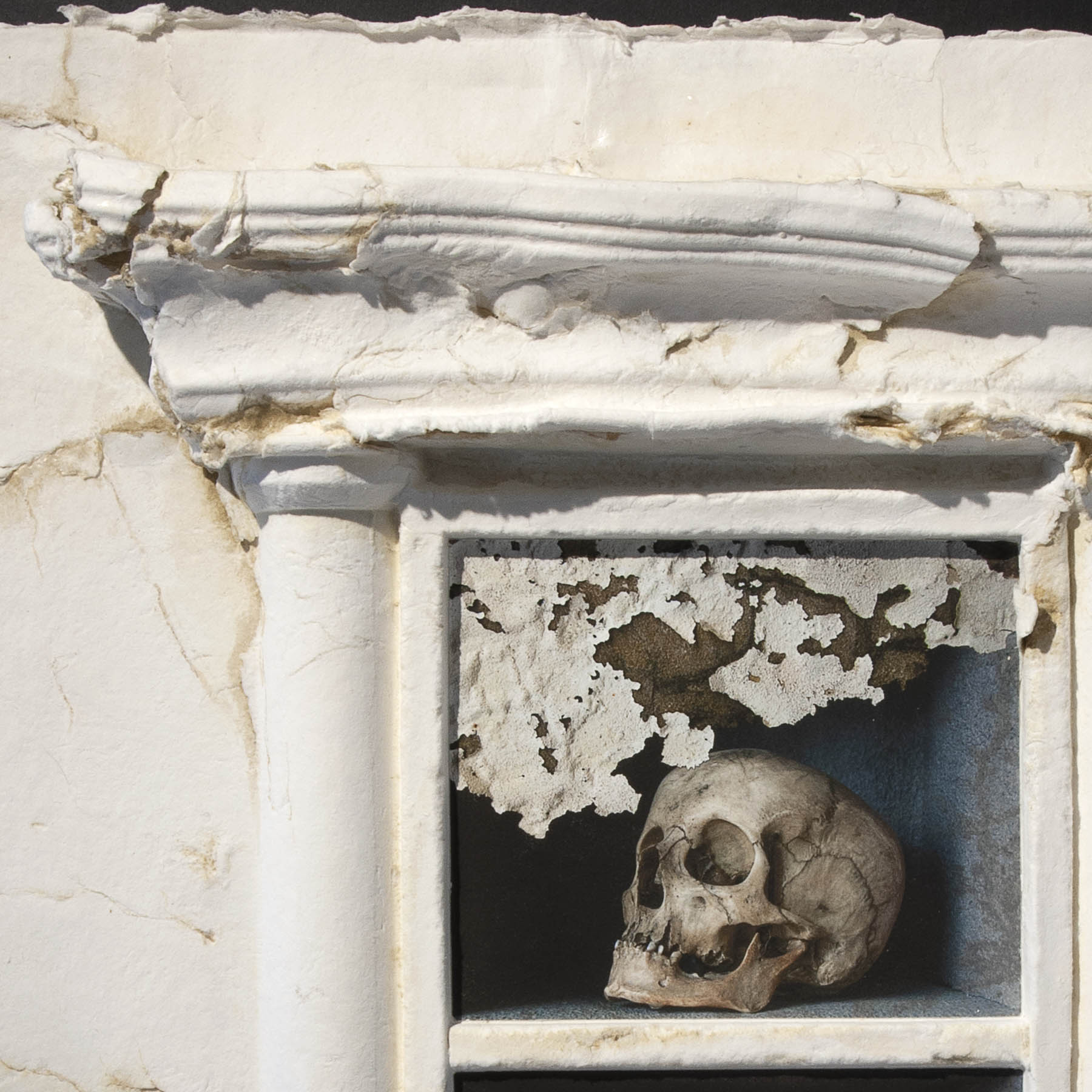
When a photographic element is embedded within a decaying three-dimensional tabernacle frame, the work becomes a powerful synthesis of still life tradition and vanitas motifs. Photography, by its nature, captures a suspended moment—an illusion of permanence—yet when set within a deteriorating architectural frame, the illusion is ruptured.
Here, the photograph functions as a modern memento mori—a surrogate for the person or moment lost—while the tabernacle, once a sacred container for relics, transforms into an eroding altar of remembrance. This sculptural framing device not only references historical devotional practices but also foregrounds the tension between preservation and loss. In this way, the photographic vanitas becomes both shrine and ruin, a contemporary meditation on mortality, memory, and the passage of time.